The Short Answer
Yes, you can daisy chain air movers that support the feature, and the number per chain is set by the amp draw on the labels and the circuit rating: add up the published amp draw of every mover in the chain, and the total has to stay under the breaker's rating. A daisy chain is a power extension, not a power source, so the circuit is the ceiling and the movers divide what it can deliver. The chain is only as safe as the math behind it.
The setup order is simple. Read the amp draw on each mover, add the numbers for the whole row, and keep the total under the breaker rating of the circuit. Commercial buildings commonly run 15-amp and 20-amp circuits, and wet drying work puts GFCI protection in the picture, which is why the label reading matters before the plugging starts. The manual numbers are the law of the chain.
Daisy Chaining Air Movers: The Electrical Facts
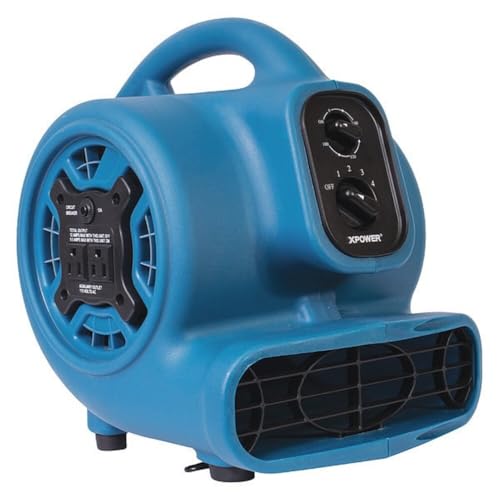
The daisy chain is the air mover feature that ends the extension cord hunt: movers with the feature plug into each other, so the row runs from the one receptacle the drying room actually has. The XPOWER P-230AT is the reviewed mover in this class with the daisy chain capability, and its value is setup time, which is drying time. The chain is the setup-time spec of the drying fleet. One outlet is enough when the movers know how to share it.
The amp draw of each mover is the number that decides the chain's length, and it is printed on the machine for exactly this reason. Every mover in the chain adds its amp draw to the load on the circuit, so the crew adds the numbers on the labels and compares the total to the circuit's rating. The mover count that works on a 20-amp circuit may not fit a 15-amp one. Amp draw is the currency of the chain. The labels do the math. The crew just has to read them.
The breaker is the ceiling of every daisy chain, and the circuit behind it is the real limit. When the total amp draw of the chained movers approaches the circuit rating, the breaker trips, which is the building's way of protecting the wiring from the load. The trip is not the chain failing, it is the math working. Stay under the circuit rating, and the breaker never has to speak up. The breaker is not the enemy of the chain. It is the referee.
Drying is wet work, and wet work is where GFCI protection belongs in the electrical picture. GFCI receptacles monitor the circuit for ground faults, which matters when the equipment runs near the water the movers are drying. The chain plugs into the protection the building provides, and the movers run inside that reality. GFCI protection is part of the drying setup, not an optional extra. Water and electricity are the reason the rules exist.
A daisy chain of air movers is a line of people drinking from one cooler: everyone gets a cup, and the cooler is the limit. The breaker is the cooler's size, the amp draw is each cup, and the chain works until the cups outnumber the cooler. Count the cups against the cooler before the line forms. The chain does not make more power. It shares what the circuit has.
| Chain question | Answer | Why |
|---|---|---|
| Can movers daisy chain? | Yes, with the feature | Movers like the XPOWER P-230AT plug into each other |
| How many per chain? | Set by the math | Total amp draw has to stay under the circuit rating |
| What stops the chain? | The breaker | The circuit trips when the load passes its rating |
| What about wet sites? | GFCI protection | Ground-fault protection belongs on wet drying work |
What This Means for Your Operation
The daisy chain is a real setup advantage when the numbers are respected. Add the amp draws on the labels, keep the total under the circuit rating, and run the row through the protection the building provides. The mover count guide pairs with the chain question, because the room layout decides how many movers the row needs.
Frequently Asked Questions
Can you daisy chain air movers?
How many air movers can I daisy chain?
What happens if I overload a daisy chain?
Is daisy chaining safe on wet drying jobs?
Reference Standards for This Category
Published standards and programs that buyers in this category are typically accountable to. Listed for context, not as an endorsement of any product on this page.
Related
 Review
 Review
 Review