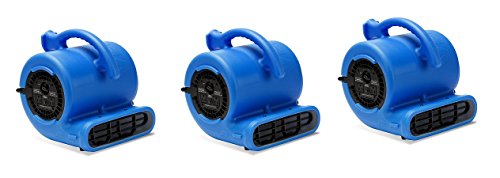
What the B-Air VP-25 Actually Is
The VP-25 is B-Air's air mover, a blower built to push high-volume air across wet surfaces so the moisture leaves faster. It is the machine the drying business runs by the half-dozen: 1/4 HP of motor, CFM-class output, a stackable frame, and the carpet and floor drying duty that restoration and cleaning routes demand. It does not filter, heat, or extract water. It moves air, which is the part of drying everything else depends on. The extractor pulls the water out. The mover pulls the wet out of what is left.
CFM, cubic feet per minute, is the airflow spec that decides how fast a wet surface dries, and the VP-25 is rated in that class without hiding behind a toy motor. Air movement is what carries the moisture off the carpet and floor, so the mover's output is the drying speed. The honest reading is that CFM only matters when the air is pointed at the wet surface, which is why placement is the other half of the drying equation. Airflow is the engine of drying, and the VP-25 has real CFM behind it. A mover with no airflow is a box. A mover with airflow is a drying crew.
The 1/4 HP motor is the VP-25's published power spec, and in the air mover class it is the honest workhorse register: enough motor to run the blower through a full drying pass without the airflow sagging. Commercial drying runs machines for hours at a time, so the motor is not a burst part, it is a shift part. The motor is the machine's ability to keep moving air when the crew has moved on. Drying is a marathon, and the motor has to run the whole race.
The stackable frame is the VP-25's answer to the commercial storage question. Two movers on top of each other take the floor space of one, which changes the math for the van, the shop, and the drying room that runs multiple units. A fleet of stackable air movers packs tighter, stores smaller, and still rolls out to the job as a full drying crew. Stacking is the spec that makes a fleet possible in the space of a single machine. Every drying job is a stacking problem before it is an airflow problem.
The VP-25 is a carpet and floor drying machine, the tool that runs after the extractor has pulled the bulk of the water. On carpet, the mover pushes air across the nap so the backing and pad dry instead of souring; on hard floor, it dries the surface pass that mops and floods leave behind. The drying schedule that follows extraction is its own skill, and the mover is the machine that makes the schedule work. Carpet and floor drying is the VP-25's whole job, and it does it without drama. The extractor wins the first battle. The mover wins the war.
A wet carpet after extraction is a towel left on the floor, and a towel needs wind, not patience. The B-Air VP-25 is the wind: a steady CFM-class current across the surface that carries the moisture out of the nap and back into the room's air. Point the air across the wet surface, and let the mover do the drying the towel cannot. Air movement is the oldest drying technology, and it still wins.
- 1/4 HP motor: the workhorse register for the drying day
- CFM-class airflow: high-volume air for carpet and floor drying
- Stackable frame: fleet storage that takes the space of one machine
- Commercial position: the air mover crews buy first
| Job profile | VP-25 fit | Why |
|---|---|---|
| Carpet drying after extraction | Yes | Airflow across the nap dries the backing and pad |
| Hard floor drying passes | Yes | Surface airflow finishes the flood pass |
| Building a drying fleet | Yes | Stackable frames pack multiple units in one footprint |
| Deep water removal | No | That is the extractor and wet/dry vacuum job |
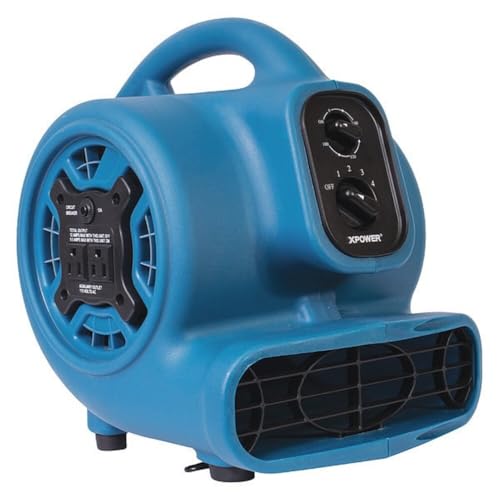
The honest limits of the VP-25 are the feature lines it does not publish. There is no timer for unattended passes and no daisy chain for the single-outlet row, which is the territory of the XPOWER P-230AT, and the budget aisle sells a mover with a bigger published motor for less money. The VP-25 answers with the position that matters most in this class: it is the standard, the machine that runs the route and keeps running it. Buy the VP-25 for the benchmark, and shop the features when the job demands them. Standards do not need gimmicks. They need to keep working.
B-Air VP-25 vs the Competition
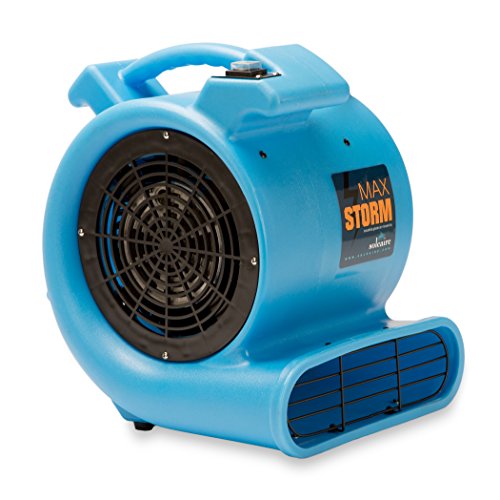
| Spec | B-Air VP-25 | XPOWER P-230AT | Soleaire Max Storm |
|---|---|---|---|
| Motor | 1/4 HP | 1/5 HP | 1/2 HP |
| Airflow | CFM-class | CFM-class | CFM-class |
| Stacking | Stackable | Stackable | Not stated |
| Features | Core mover | Timer, 3-speed, daisy chain | Budget build |
| Drying duty | Carpet and floor drying | Carpet drying | Floor fan and carpet drying |
| Position | Commercial standard | Scheduled drying | Budget drying start |
The B-Air VP-25 anchors the air mover class in this class: 1/4 HP, CFM-class airflow, and a stackable frame for the commercial drying fleet. The XPOWER P-230AT answers with the timer and chain features, and the Soleaire Max Storm covers the budget lane with the biggest published motor. One aisle, three positions, and the route picks.
Who Should Buy the B-Air VP-25
- You are building the commercial drying fleet and want the air mover crews buy first
- You need stackable frames that pack a fleet into one footprint
- Your work is carpet and floor drying after extraction and flood passes
- You want 1/4 HP and CFM-class airflow without the feature markup
- You need a timer for unattended drying passes, where the XPOWER leads
- You need daisy chain power so a row of movers runs from one outlet
- Your budget is the entry tier and the Soleaire's bigger motor spec wins the sheet
- You expect the mover to extract water, which is the extractor's job
B-Air VP-25 Specs
| Model | B-Air VP-25 |
| Type | Air mover (blower) |
| Motor | 1/4 HP |
| Airflow | CFM-class |
| Stacking | Stackable |
| Drying | Carpet and floor drying |
| Best for | Commercial drying fleets |
Frequently Asked Questions
Is the B-Air VP-25 good for commercial drying?
How much airflow does the VP-25 produce?
Can you stack B-Air VP-25 movers?
How does the VP-25 compare to budget air movers?
Reference Standards for This Category
Published standards and programs that buyers in this category are typically accountable to. Listed for context, not as an endorsement of any product on this page.
Related
 Review
 Review