The Short Answer
The best commercial air mover is the B-Air VP-25 for the standard drying fleet, the XPOWER P-230AT when drying runs on a schedule, and the Soleaire Max Storm for the budget start. All three push CFM-class airflow for carpet and floor drying, and all three are commercial answers to the same job: moving air across wet surfaces until the moisture leaves. Match the mover to the route, and the drying pays the invoice.
The order of operations for a buyer is simple. Look at how the route runs: crew-run passes point to the VP-25 standard, scheduled and overnight drying points to the P-230AT, and the first-mover budget points to the Max Storm. Then read the stackable and feature story against the fleet, because storage and setup are drying time too. One mover, matched to the route, is the whole commercial answer.
The Best Commercial Air Movers, Compared
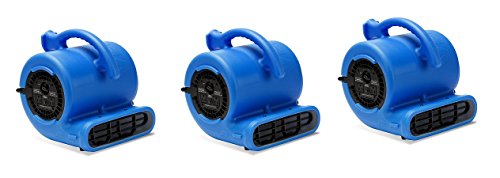
The B-Air VP-25 is the commercial standard because it answers the two questions a drying route asks first: does it move enough air, and does it survive the fleet. Its 1/4 HP motor runs the CFM-class airflow that dries carpet and floor, and its stackable frame packs multiple units into one footprint. The full case is in the B-Air VP-25 review. When the route is a daily drying operation, the VP-25 is the machine the fleet is built around. The standard exists because the job is common.
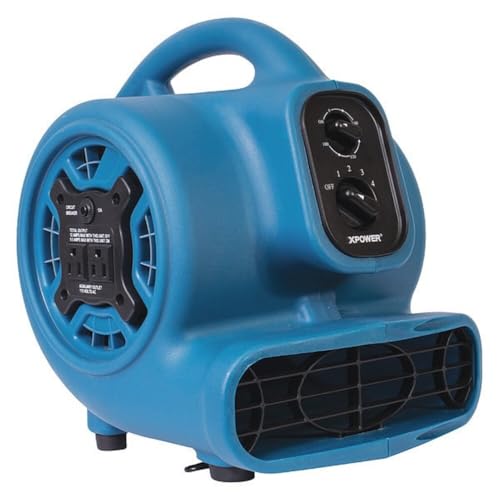
The XPOWER P-230AT is the commercial answer for the route that dries on a schedule: overnight passes, unattended rooms, and the jobs where the crew has to leave the movers running. Its built-in timer runs the pass and shuts the machine off, its 3-speed dial matches airflow to the room, and its daisy chain powers a row from one outlet. When drying has to run without a babysitter, the P-230AT is the mover that runs it. The schedule is the spec, and the timer delivers it.
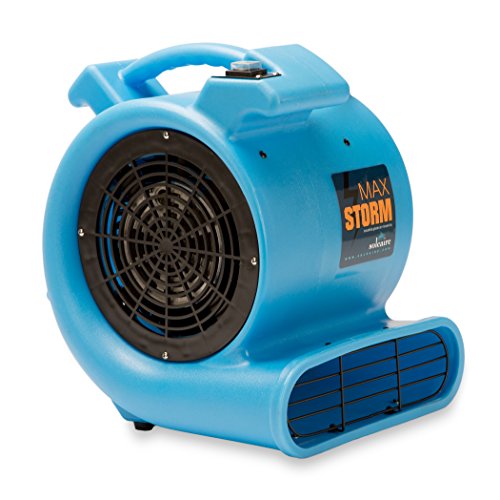
The Soleaire Max Storm is the commercial answer for the operation buying its first mover on a budget. It publishes the biggest motor in the class, 1/2 HP, in a lightweight floor fan frame that covers carpet and hard floor drying at an entry price. Commercial does not only mean expensive. It means the machine earns its place, and the Max Storm earns it on the first contracts. The budget mover with the real motor is how new businesses start drying right.
The CFM rating is the airflow spec that decides drying speed, and every commercial air mover lives or dies on it. The honest reading is that airflow only works when it is aimed at the wet surface, which is why placement is the other half of every drying job. Buy the mover with real CFM, and aim it like the drying depends on it, because it does. CFM is the engine. Placement is the steering.
| Route profile | Pick | Why |
|---|---|---|
| Daily commercial drying fleet | B-Air VP-25 | Stackable standard with carpet and floor drying |
| Overnight and scheduled drying | XPOWER P-230AT | Timer, 3-speed control, and daisy chain |
| First mover on a budget | Soleaire Max Storm | 1/2 HP motor at the entry price |
| One-outlet drying rooms | XPOWER P-230AT | Daisy chain powers the row from one receptacle |
What This Means for Your Operation
Match the mover to the drying route and the fleet budget. The B-Air VP-25 anchors the standard fleet, the XPOWER P-230AT runs the scheduled passes, and the Soleaire Max Storm starts the new operation. All three move the airflow that turns wet carpet into dry revenue, and all three are the blower behind the commercial drying invoice.
Frequently Asked Questions
What is the best commercial air mover?
Do air movers actually dry carpet?
How many air movers do commercial crews run?
Are cheap air movers worth it for commercial use?
Reference Standards for This Category
Published standards and programs that buyers in this category are typically accountable to. Listed for context, not as an endorsement of any product on this page.
Related
 Review
 Review
 Review