The Short Answer
For post-construction cleanup, buy a full-size wet/dry vacuum with real capacity and a filter system that survives fine dust, and treat drywall dust as the test the machine has to pass. The 16-gallon machines with cartridge filters carry the construction pass, and the filter is the part that decides whether the machine finishes the day or chokes on it. The dust is the spec. The tank is the stamina.
The construction day is a mixed day: drywall dust, sawdust, packaging debris, and water from the trades that ran ahead of the cleanup. That is why the cartridge filter is the construction answer, it handles the fine dust and the wet rotation without a mid-job swap, and why capacity matters, the pass across a whole floor should not stop every few minutes. One machine, one rotation, and the dust does not win.
The Post-Construction Cleanup Specs That Matter
Drywall dust is the real test of a post-construction machine because it is fine enough to float and aggressive enough to clog. It settles on every surface, packs into the filter, and strangles the suction from the inside, which is why a machine that passed the water test can fail the dust test by lunch. The fine dust pass demands a filter that breathes under load and a crew that checks it. The dust decides whether the machine finishes the construction day. Water is honest. Drywall dust is sneaky.
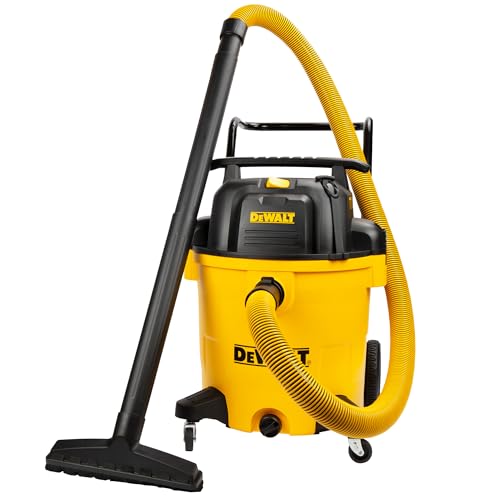
The cartridge filter is the construction answer because the site does not run a single mess type. The day mixes drywall dust, packaging, debris, and the water left by the trades, and the Ridgid 1650RV and DeWalt DXV16PA both run cartridge systems that cover the rotation without a swap. One machine, one filter, and the crew keeps moving through the whole pass. The cartridge is the filter that matches the mixed construction day. No filter change means no mid-job pit stop.
The construction pass is a volume job: a whole floor of dust, debris, and drop cloths' worth of leftovers. The 16-gallon capacity of the full-size machines keeps the crew in the work between empties, which is the difference between a cleanup that follows the schedule and one that owns it. On the big pass, every empty is a stop, and the big tank makes the stops rare. Capacity is the construction machine's schedule. The floor gets cleaned in passes, and the tank sets the pass length.
Some post-construction cleanups end in spaces that get inspected for dust: the office fit-out, the medical build, the tenant space with air-quality expectations. For those sites, HEPA-grade filtration is the difference between a cleanup that passes inspection and a cleanup that gets a second visit. The honest note is that the machines in this class run cartridge filters without a published HEPA system, so the dust-sensitive buyer shops the HEPA class directly. HEPA is the spec when the site checks the air. The filter decides whether the crew leaves once.
The full-size machine carries the big pass, and the compact class carries the punch list: the final calls, the small sites, and the touch-up dust that appears after the big machine leaves. A 5-gallon machine rides to the call, handles the one-room dust, and stores in the van for the next stop. The punch list is a small-machine job, and the compact class owns it. The big pass and the punch list are two different routes.
| Site scenario | Machine | Why |
|---|---|---|
| Full-floor construction pass | 16-gallon full-size | Capacity with cartridge filter for the mixed day |
| Mixed dust, debris, and water | Cartridge-filter machine | One filter rotation without the mid-job swap |
| Punch-list and small sites | 5-gallon compact | Rides to the call, stores in the van |
| Dust-sensitive inspections | HEPA-class machine | Fine-dust filtration the site checks for |
What This Means for Your Operation
Match the machine to the phase of the job. The 16-gallon full-size machines carry the construction pass on cartridge filters, and the compact class carries the punch-list calls. For the sites that inspect the dust, step up to the HEPA class, and keep the filter rotation ahead of the dust.
Frequently Asked Questions
Can a wet/dry vacuum handle drywall dust?
What size wet/dry vac is best for post-construction cleanup?
Do I need HEPA for construction cleanup?
Why does my wet/dry vac lose suction on drywall dust?
Reference Standards for This Category
Published standards and programs that buyers in this category are typically accountable to. Listed for context, not as an endorsement of any product on this page.
Related
 Review
 Review
 Review