The Short Answer
For flood cleanup, use a full-size 16-gallon wet/dry vacuum with a cartridge filter for the residual water, and bring a pump when the standing water is deeper than the vacuum can handle efficiently. The big tank is the flood spec because it keeps the crew working between drain stops, and the cartridge filter keeps the machine in the wet pickup rotation without a swap. Capacity is the flood machine's whole argument.
The division of labor is simple. The pump moves the deep standing water, and the wet/dry vacuum finishes the job: the puddles, the edges, and the water the pump cannot reach. Trying to vacuum up a flooded basement gallon by gallon is how a crew loses a day, and buying a pump when the water is an inch deep is how it wastes one. Match the tool to the depth of the water.
Flood Cleanup: What the Wet/Dry Vac Brings
The 16-gallon tank is the flood spec because flood water arrives in volume and leaves one tank at a time. A smaller machine empties constantly on a water job, and every empty is a stop in the middle of a race against water damage. The full-size machines in this class carry the capacity that keeps the crew in the work, which is the difference between a cleanup that finishes and a cleanup that becomes a schedule. Gallons are the flood machine's speed. Stops cost time, and time is what flood work cannot spend.
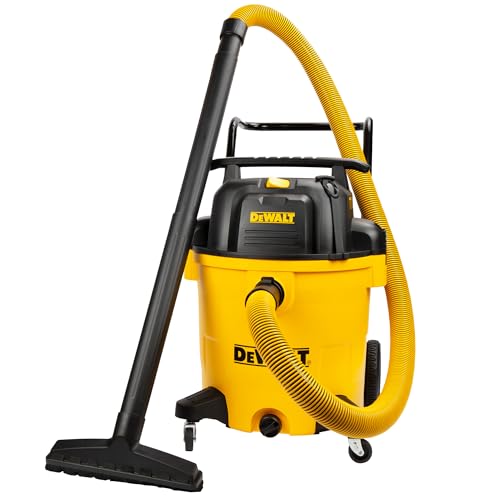
Flood cleanup is a wet day from the first pass, and the filter has to be built for it. The cartridge filter on the Ridgid 1650RV and the DeWalt DXV16PA handles wet pickup without the operator fighting a dry-side filter, and it survives the rotation when the same machine later runs the dust side of the restoration. The filter is the machine's permission to be a flood tool. Water work is a filter decision before it is a tank decision.
The honest limit of any wet/dry vacuum is the depth of the water it is asked to move. For standing water measured in inches of depth across a whole floor, a pump or transfer setup is the tool that moves the volume, and the vacuum handles what the pump leaves: the residual puddle, the low spot, the edge. Pumps move the flood. Vacuums finish it. The crew that brings both finishes the job once.
Flood water does not stay in the middle of the floor. It finds the baseboard, the doorway, the low corner, and the hose is what reaches those places. The hose story on the full-size machines in this class is the reach the cleanup day needs, and the right nozzle work pulls the water out of the edges where the damage settles in first. Reach decides how much of the water actually leaves. The last inch of water is the inch that does the damage.
| Water scenario | Tool | Why |
|---|---|---|
| Deep standing water across a floor | Transfer pump | Moves the volume the vacuum would drain on all day |
| Puddles and residual water | 16-gallon wet/dry vac | Capacity and cartridge filter for the wet pass |
| Edges, corners, and low spots | Wet/dry vac with hose and nozzle | Reach pulls the water the pump cannot chase |
| Carpeted areas after extraction | Carpet extractor | The carpet side of restoration runs its own machines |
What This Means for Your Operation
Flood response is about matching tools to water. The full-size 16-gallon machines carry the wet pass with cartridge filters built for the day, and a pump carries the deep standing water the vacuum should not chase. For carpeted areas, the carpet extractor side of the business takes over, and the wet/dry vac covers everything else.
Frequently Asked Questions
Can a wet/dry vacuum pick up flood water?
Is a pump better than a vacuum for flood cleanup?
What size wet/dry vac do I need for flood work?
Do I need a special filter for flood water?
Reference Standards for This Category
Published standards and programs that buyers in this category are typically accountable to. Listed for context, not as an endorsement of any product on this page.
Related
 Review
 Review
 Review