
What the Ridgid 1650RV Actually Is
The 1650RV is Ridgid's 16-gallon entry in the professional wet/dry vacuum class: a shop vac that swallows water, dust, and construction debris without flinching. Its 6.5 HP motor does the pulling, its cartridge filter handles the wet-and-dry rotation without a filter swap, and the included hose makes it work the day it arrives. It is the cleanup machine behind the cleanup machine, the one that shows up after the crew is done making the mess. Every contract has a mess. The 1650RV is the machine that eats it.
The 16-gallon tank is the first number a commercial buyer checks, and it is the right number to check. Capacity decides how much water and debris the machine holds before the crew stops to empty it, and on a commercial job, every drain trip is payroll. A 16-gallon tank keeps the machine in the work through the flood pickup, the post-construction pass, and the daily cleanup rounds that smaller tanks interrupt every few minutes. Tank size is time, and the 1650RV carries a working chunk of it. The drain is where small tanks lose their shifts.
The 6.5 HP motor is the Ridgid's suction story. Horsepower in the wet/dry class translates to the airflow and lift that pull water out of a carpet edge, drag dust out of a construction joint, and keep the pickup moving through heavy debris without stalling. On the jobs where the machine has to earn its keep, the motor is the part that never gets a break. Suction is the product, and 6.5 HP is the number behind it. The motor is the reason the crew reaches for this machine instead of the broom.
The cartridge filter is the detail that makes the 1650RV a true wet/dry machine instead of a dry vac that tolerates water. A cartridge filter handles both wet pickup and dry dust without the operator stopping to swap filter types between jobs, which is exactly the rotation a commercial cleanup day runs. Wet this morning, dry this afternoon, and the filter stays in place the whole shift. The cartridge system is the machine's answer to the mixed day. No filter swap means no lost minutes and no forgotten parts.
A wet/dry vacuum without a cartridge system is a truck with two fuel tanks and one hose: every time the job changes from wet to dry, someone has to stop and re-plumb. The 1650RV runs its cartridge filter across both, so the crew keeps working. The machine that stops less is the machine that finishes first. Switching jobs should be a walk to the next room, not a filter change.
The hose is the part of a shop vac that gets judged by the hands, and the 1650RV ships with the hose a commercial machine needs. Hose quality decides how the machine reaches into the corners, up the walls, and across the floor, and a hose that kinks or pulls loose costs the crew time on every pass. The hose is the interface between the motor and the mess. A strong motor with a weak hose is a strong motor with a leash.
The honest reading of the hose story is that accessories extend it. The included hose covers the daily work, and the commercial crew that runs flood response or post-construction routes adds the extension wands and nozzles that reach the specific jobs, which is normal for the class. Buy the machine for the hose it ships with, and grow the kit as the contracts grow. The machine arrives ready. The kit is the upgrade path.
The Ridgid reputation in the shop vac class is durability, and the 1650RV is the machine that reputation is built on: the tank that survives the van, the motor that survives the schedule, and the filter system that survives the dust. Commercial machines do not die of old age, they die of the jobs they run, and the 1650RV is built for the jobs that kill the cheap ones. Durability is the spec that shows up in year three, not on the box. The warranty is a promise. The machine is the proof.
- 16-gallon tank: commercial capacity that cuts the drain trips
- 6.5 HP motor: the suction that pulls water, dust, and debris
- Cartridge filter: wet and dry pickup without the filter swap
- Hose included: ready for the day it arrives
| Job profile | 1650RV fit | Why |
|---|---|---|
| Commercial daily cleanup | Yes | 16-gallon capacity with cartridge filter rotation |
| Flood water pickup | Yes | Big tank and 6.5 HP suction on the water work |
| Post-construction dust | Yes | Cartridge filter handles the fine dust pass |
| Truck-only small jobs | No | The 5-gallon compact class covers that footprint |
Ridgid 1650RV vs the Competition
| Spec | Ridgid 1650RV | DeWalt DXV16PA | Vacmaster Beast |
|---|---|---|---|
| Capacity | 16 gallons | 16 gallons | 5 gallons |
| Motor | 6.5 HP | Full-size suction | Compact motor |
| Filter | Cartridge filter | Cartridge filter | Compact filter |
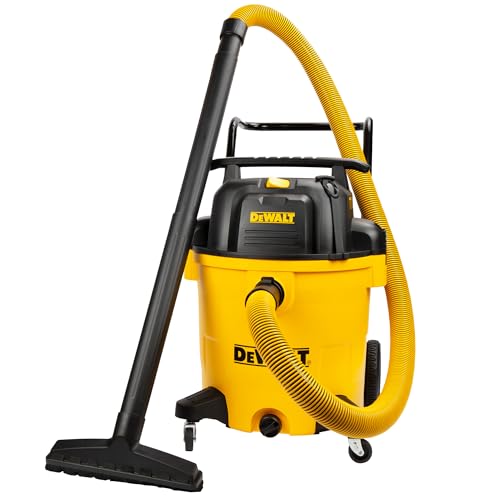
| Format | Full-size shop vac | Poly full-size shop vac | Wall-mount compact |
| Best duty | Commercial cleanup | Commercial cleanup | Jobsite and truck |
The Ridgid 1650RV anchors the full-size side of this class: 16 gallons, 6.5 HP, and a cartridge filter for the commercial cleanup day. The DeWalt DXV16PA matches its gallon rating with a poly tank, and the Vacmaster Beast covers the compact 5-gallon lane. Same aisle, three different jobs.
Who Should Buy the Ridgid 1650RV
- You run commercial cleanup days that mix water, dust, and debris
- You need the 16-gallon capacity that cuts the drain trips on the route
- You want 6.5 HP suction with a cartridge filter for wet and dry rotation
- You want a shop vac built to outlive the warranty it ships with
- Your work is truck-only small jobs, where the 5-gallon compact class wins the van space
- You need a wall-mount footprint that stores off the floor
- Your budget is the entry tier and the capacity is more than the route spends
- You expect one machine to cover full-size cleanup and jobsite portability equally
Ridgid 1650RV Specs
| Model | Ridgid 1650RV |
| Type | Wet/dry vacuum (shop vac) |
| Capacity | 16 gallons |
| Motor | 6.5 HP |
| Filter | Cartridge filter |
| Hose | Included |
| Best for | Commercial cleanup and shop use |
Frequently Asked Questions
Is the Ridgid 1650RV a commercial wet/dry vacuum?
What is the 6.5 HP motor good for?
Can the 1650RV pick up water and dry dust without changing filters?
Where does the 1650RV fall short?
Reference Standards for This Category
Published standards and programs that buyers in this category are typically accountable to. Listed for context, not as an endorsement of any product on this page.
Related
 Review
 Review