The Short Answer
Replace the belt when the brush roll stops turning, hesitates on carpet, or you smell burning rubber. A slipping belt burns, a stripped belt stops the brush entirely, and both leave carpet uncleaned while the motor runs on. On commercial uprights, the belt is a wear item with a maintenance schedule, not a part that fails without warning.
The replacement itself is straightforward on most commercial machines: open the base plate, remove the old belt, fit the new one over the motor pulley and brush roll, and test the spin by hand before closing it back up. The two decisions that actually matter are buying the right belt type and choosing OEM over aftermarket.
Signs an Upright Vacuum Belt Is Failing
A burning rubber smell is the belt telling you it is slipping instead of gripping. The motor spins, the belt drags, and the friction heats the rubber until the odor reaches the operator. When the crew smells it, the belt is already costing cleaning performance and motor life. The smell is the cheapest diagnostic tool on the cart.
Commercial uprights use two main belt families. Flat belts are smooth loops that rely on surface tension, and cogged belts have teeth that grip a matching pulley. They are not interchangeable, and fitting the wrong family is a common cause of premature belt failure on an otherwise healthy machine. Read the model requirement before you order.
When the brush roll hesitates, stalls on carpet, or stops entirely while the motor still hums, the belt has stripped or snapped. The machine will still make noise and still pull some air, which is why this failure hides until someone checks the carpet. A brush that is not turning is not cleaning, no matter what the motor sounds like.
Belt Replacement: the Commercial Upright Repair You Can Do
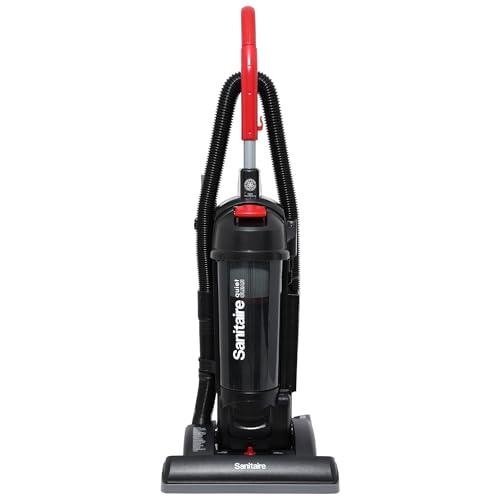
Hoover Commercial and Sanitaire uprights use model-specific belts, which is why the part number matters more than the brand name. A Hoover CH54113 belt is not a Sanitaire belt, even when the machines look similar from across the closet. Check the model plate, order the matching part, and keep a spare on the cart so the fix happens on site.
After the new belt is seated, spin the brush roll by hand before powering the machine. It should turn freely and the belt should sit snug without being forced. Correct tension is the whole game: too loose slips, too tight strains the motor bearings. The hand test catches both before the route does.
On OEM vs aftermarket: OEM belts are made to the original tolerance and are the safe default for commercial duty cycles. Aftermarket belts vary widely, and a too-soft belt on a nightly route will stretch, slip, and burn out early. The belt is a small part with a large failure mode. Spend the difference and buy the one that matches the spec.
What This Means for Your Operation
Add belt inspection to the weekly cart check and keep one OEM belt per machine in the van. The cost of a spare belt is trivial next to the labor of a mid-route failure, and the repair is fast enough that a trained operator fixes it on site instead of losing the machine for a day. The five-minute fix only exists if the right belt is already on the cart.
Frequently Asked Questions
How often should I replace a commercial upright vacuum belt?
What are the signs of a failing vacuum belt?
Should I buy OEM or aftermarket belts?
Reference Standards for This Category
Published standards and programs that buyers in this category are typically accountable to. Listed for context, not as an endorsement of any product on this page.
Related
 Review
 Review
 Review