The Core Difference
The Bissell BigGreen BG1000 is the answer for operators who have already broken the lighter stuff. Its metal construction puts steel where plastic housings crack, and its dual-motor system keeps the brush spinning at full speed when the bag runs heavy. Add HEPA media filtration and a 14-inch path, and you have a machine built on the assumption that the crew will drop it, ram it, and run it until Friday. You are not paying for looks here. You are paying for the Tuesday when nothing is broken.
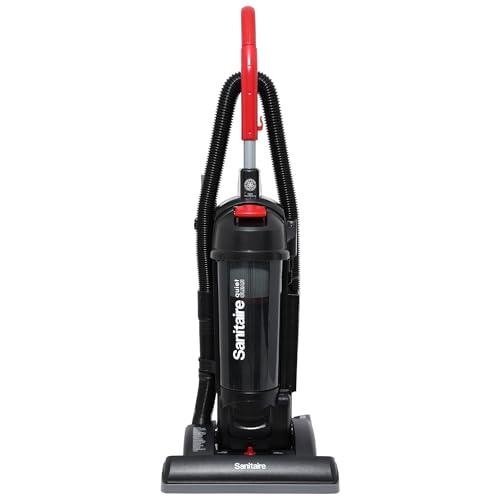
The Sanitaire FORCE SC5845 approaches the same nightly abuse from the filtration side. It matches the dual-motor layout and the 14-inch path, then adds a sealed HEPA system that routes every ounce of air through the filter before it returns to the room. On school, dorm, and church routes where indoor-air language is written into the contract, that sealed path is the difference between a filtration claim and a documented answer. One machine survives the crew. The other survives the inspection.
Two tank builds, two kinds of armor. The BG1000 armors the chassis against impact, drops, and shared-crew handling. The SC5845 armors the airflow for containment, so nothing the machine picks up gets back into the room. Most routes need one of those. Some routes need both. If the budget buys only one, the contract language decides which armor you cannot live without.
- Bissell BG1000: metal construction, dual motor, HEPA media, 14-inch path, built for high-abuse routes
- Sanitaire SC5845: sealed HEPA system, dual motor, 14-inch path, built for carpet-heavy institutional routes
- Shared ground: both bagged, both commercial-rated, both made to run nightly
The detailed cases live in the Bissell BG1000 review and the Sanitaire SC5845 review. What follows is the fork: buy the Bissell when the building beats up the machines, and buy the Sanitaire when the contract beats up on filtration language. Pick the failure you are actually trying to prevent.
Spec-for-Spec Breakdown
| Spec | Bissell BG1000 | Sanitaire SC5845 |
|---|---|---|
| Path width | 14 in | 14 in |
| Motor | Dual motor | Dual motor |
| Filtration | HEPA media | HEPA, sealed system |
| Construction | Metal | Heavy-duty commercial build |
| Best duty | High-abuse routes and shared crews | Carpet-heavy institutional routes |
On paper the BG1000 and the SC5845 are nearly twins: dual motors, 14-inch paths, commercial builds rated for nightly work. The split is where each machine spends its armor. Metal construction answers the physics of impact. Sealed HEPA answers the paperwork of filtration. Buy the armor your route actually gets hit with.
Which One Wins (and When)
Choose the BG1000 when the machines take the hits: shared crews, carts loaded at speed, door frames at shoulder height, and nobody's personal property in the mix. Metal construction in the impact zones is the difference between a shrug and a trip to the shop. If your last two uprights died from impact rather than wear, this is the machine that treats that cause of death as the design brief. Durability is a schedule spec. The machine that stays running keeps the route on time.
| Failure mode | Machine that resists it |
|---|---|
| Door-frame collisions and cart drops | Bissell BG1000 metal build |
| Filtration complaints from clients | Sanitaire SC5845 sealed HEPA |
| Brush slowdown as bags fill | Both, dual motor |
| Cracked plastic housings | Bissell BG1000 metal build |
Choose the SC5845 when the contract names filtration, or when the carpet demands the deepest agitation you can get. The sealed HEPA system answers the question every facilities director eventually asks: where does the dust go? And the dual-motor brush keeps the agitation honest when the bag is half full, which on deep institutional pile is exactly when a single-motor machine starts lying about the job it is doing. The SC5845 is the machine you buy when the floor is the product.
The honest cost is that the SC5845 rides at 20 pounds, and the BG1000 is built for the cart, not the shoulder. Neither is a carry machine, so stair-heavy routes without carts should point back to the Hoover CH54113 or the Oreck XL2100RHS before anyone buys either tank. Every pound has a route it belongs on.
- Your machines take daily impact from shared crews and cart handling
- You want metal construction in the places plastic housings crack
- Your route is carpet-heavy and needs dual-motor agitation that does not fade
- You are replacing light-duty uprights on an annual cycle and want that math to change
- Your contract names HEPA filtration and you need a sealed system
- Your carpet is deep institutional pile with daily traffic
- Your route is cart-based and flat, where 20 pounds never leaves the cart
- You want dual-motor agitation plus documented containment
Frequently Asked Questions
Are the BG1000 and SC5845 the same machine?
Which one is better for schools?
Are these machines too heavy for a small crew?
Reference Standards for This Category
Published standards and programs that buyers in this category are typically accountable to. Listed for context, not as an endorsement of any product on this page.
Related
 Review
 Review
 Review