The Short Answer
HEPA filtration means the vacuum captures 99.97 percent of particles at 0.3 microns, and a sealed system is what guarantees the air actually passes through the filter. A true HEPA machine routes all airflow through the rated filter and back into the room only after filtration. A HEPA-type filter is a marketing cousin that does not meet the standard.
For commercial work, the practical question is what the contract asks for. Buildings that track IAQ or LEED often name HEPA in the bid. When they do, the machine you bring needs the rated filter and the sealed path to back it up, because the documentation is checked, not assumed. Filtration is a compliance checkbox before it is a cleaning feature.
True HEPA vs HEPA-Type: Reading the Label
The HEPA standard is a pair of numbers: 0.3 microns, the particle size the test uses, and 99.97 percent, the capture rate required at that size. A filter that meets the standard is a true HEPA filter. A filter that merely resembles it is not. The numbers are the whole argument.
HEPA-type is the label used when a filter captures a large share of particles but has not met the rated standard. It appears on consumer machines and some budget commercial gear, and it will not satisfy a contract that names HEPA by spec. If the bid says HEPA, the filter has to be HEPA.
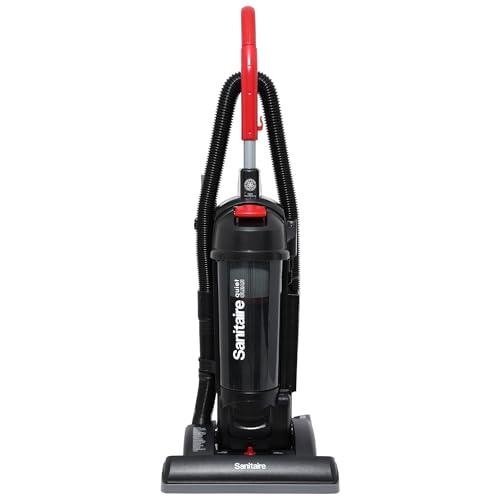
A sealed system means every ounce of airflow is routed through the filter path, with no leaks dumping unfiltered air back into the room. This is why the Sanitaire SC5845 sealed HEPA build carries weight in filtration-sensitive contracts: the machine gives the claim a defined path instead of relying on guesswork.
What LEED and IAQ Contracts Ask For
The Hoover CH54113 carries HEPA allergen filtration in a bagged design, which answers the standard question most office and school clients ask: does the machine keep dust out of the air? For everyday commercial bids, that documentation clears the bar.
When the contract names filtration with institutional language, the Sanitaire SC5845 is the answer. Its sealed HEPA system combines the rated filter with a defined airflow path, which is the difference between a brochure claim and a documented system. Read the contract language, then pick the machine that answers it in writing.
What This Means for Your Operation
Match the filtration spec to the contracts you bid. The Hoover CH54113 HEPA allergen filtration covers standard office and school work. The Sanitaire SC5845 sealed system answers the institutional language that names HEPA and IAQ by spec. Buy the documentation you will actually need to produce.
Frequently Asked Questions
What is the difference between HEPA and HEPA-type?
Does a commercial vacuum need a sealed system for HEPA?
Is HEPA filtration worth it if my contracts never ask for it?
Reference Standards for This Category
Published standards and programs that buyers in this category are typically accountable to. Listed for context, not as an endorsement of any product on this page.
Related
 Review
 Review
 Review