The Short Answer
For commercial routes, bagged vacuums usually cost less per month of ownership than bagless, because the bag protects the filter and the crew. Bagged disposal seals the dust in a bag that goes straight into the trash. Bagless emptying releases dust into the air and pushes fine debris into the filter, which then needs its own cleaning cycle and replacement schedule.
The bagless advantage is convenience at the moment of emptying: no bag purchase, no bag inventory. The costs hide downstream in filter maintenance, dust exposure, and the labor of keeping a bagless machine running at full airflow. On nightly routes, those downstream costs show up fast. The bag is cheap. The filter it protects is not.
Bagged vs Bagless: What the Daily Route Pays For
A bagged machine captures the dirt inside a bag that is sealed when full and dropped into the trash. In a client building, that means the dust never touches the air your customer breathes, and the crew never performs the bagless ritual of emptying dust into a trash can and watching a cloud rise. Hygiene is the quiet advantage of the bag.
Bagless emptying exposes the operator to whatever the machine collected, and on commercial routes that includes fine dust and allergens that a client building should not see twice. The exposure is manageable with technique and masks, but technique is training and masks are a supply line. Every bagless empty is a small hygiene event you have to manage.
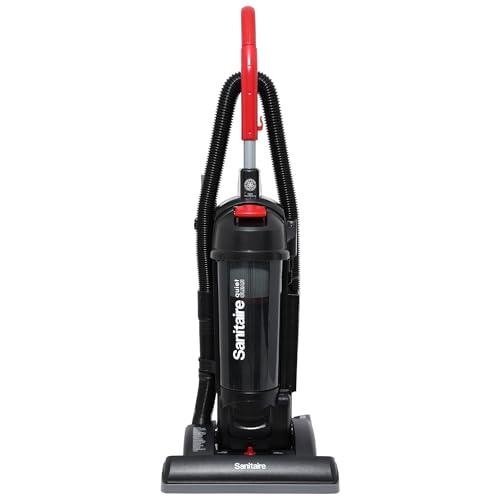
On the machines this site recommends, bagged design and HEPA filtration work as one system. The bag captures the bulk, the HEPA filter catches what passes, and the sealed disposal keeps both from becoming a client-facing problem. That pairing is why the Hoover CH54113 and Sanitaire SC5845 lead the upright category.
Commercial Routes and the Bagged Default
The Hoover CH54113 is the bagged commercial default: HEPA allergen filtration inside a bagged design that a porter can service without a toolbox. For offices, schools, and retail routes, it delivers the hygiene story and the maintenance simplicity that make bagged the professional default.
The Sanitaire SC5845 takes the same argument further for institutional routes: bagged, dual motor, and a sealed HEPA system. When the contract cares about where the dust goes, the bag and the sealed path answer together. Bagged is not the budget choice. It is the defensible choice.
- Bag cost: real but small against the filter life it protects
- Dust exposure: bagged seals it, bagless releases it at every empty
- Filtration: bagged plus HEPA keeps the filter stack working longer
- Client perception: bagged disposal reads as professional hygiene
What This Means for Your Operation
For client-facing commercial routes, buy bagged and let the bag do its job: protect the filter, protect the crew, and protect the client relationship. The bag expense is the price of not turning your crew into a dust handling operation. Bagless is fine for the garage. Bagged is the business answer.
Frequently Asked Questions
Do bagged vacuums cost more to run than bagless?
Is bagless ever the right choice for commercial cleaning?
Why do commercial uprights pair bags with HEPA?
Reference Standards for This Category
Published standards and programs that buyers in this category are typically accountable to. Listed for context, not as an endorsement of any product on this page.
Related
 Review
 Review
 Review