The Core Difference
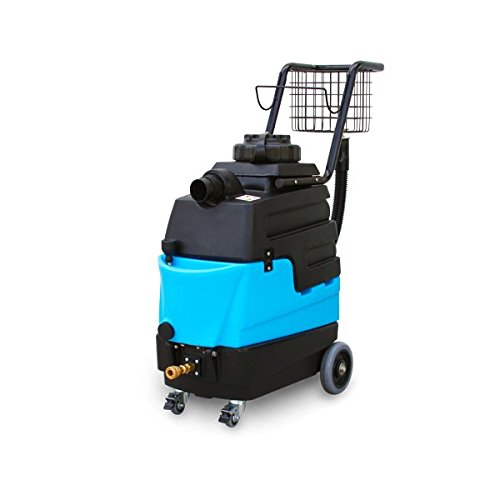
The Mytee Lite III 8070 is the portable extractor that carries a route. Its 4-gallon tank keeps the machine in the work through a string of spot cleaning stops, and its in-line heater puts hot chemistry at the wand for the stains each stop hands it. It is the machine for the operator whose day is a mixed bag: a restaurant spot here, an office carpet there, a small-area extraction between them. The Lite III is sized to the day of little jobs. It is the heated extractor that treats the route like a route.
The EDIC Bravo 300BX is the portable spotter built for the single hardest job on the route: the set-in stain and the upholstery panel where over-wetting is the classic mistake. Its 3-gallon frame and spotter format give the operator the control to meter water and suction by trigger, and the heated chemistry does the lifting on the bonds cold spotting cannot break. It is the machine for the work that gets inspected up close. The Bravo is the specialist that makes the generalists look good. Small tank, small footprint, and the highest hourly rate in the fleet.
The Mytee Lite III is the heated workhorse that follows the mixed route from stop to stop. The EDIC Bravo is the heated scalpel that comes out when the job is a stain or a sofa. Both heat the water. The difference is how much route each one carries between refills. Route breadth or job depth: that is the whole fork.
- Mytee Lite III 8070: 4-gallon tank, in-line heater, portable extractor format for spot cleaning and small-area work
- EDIC Bravo 300BX: 3-gallon tank, heated, portable spotter format for stain response and upholstery
- Shared ground: both are heated portable carpet extractors that travel to the work in a van
The full cases live in the Mytee Lite III 8070 review and the EDIC Bravo 300BX review. This page settles the split: mixed small-area routes point to the Lite III, and stain-and-upholstery work points to the Bravo. The dominant job on the route decides which heated portable goes in the van.
Spec-for-Spec Breakdown
| Spec | Mytee Lite III 8070 | EDIC Bravo 300BX |
|---|---|---|
| Tank capacity | 4 gallons | 3 gallons |
| Heat | In-line heater | Heated |
| Format | Portable extractor | Portable spotter |
| Focus | Spot cleaning and small areas | Stain response and upholstery |
| Best duty | Mixed small-area routes | Inspected spot and fabric work |
The Mytee Lite III 8070 wins the rows that decide a mixed route: a 4-gallon tank and in-line heater for a day of spot cleaning stops. The EDIC Bravo 300BX wins the rows that decide the hard jobs: a 3-gallon spotter format with the control that upholstery and set-in stains demand. Both are heated. The route decides which one heats the day.
Which One Wins (and When)
Choose the Mytee Lite III 8070 when the day is a string of stops: a spot cleaning call here, a small-area extraction there, a restaurant carpet between them. The 4-gallon tank carries the machine through more of that route between refills, and the in-line heater keeps hot chemistry ready for whatever each stop hands over. For the operator whose portfolio is little jobs in volume, the bigger tank is the difference between finishing the route and living at the sink. The Lite III is the heated portable that keeps up with a working day. A gallon more of tank is a route of fewer interruptions.
The honest trade is precision. The Bravo's spotter format leans further into the single-job control that upholstery demands, so crews whose work is mostly fabric and set-in stains may find the specialist the better fit. Buy the Lite III for the breadth of the mixed route, and let the Bravo take the work that needs the scalpel. Route breadth is a feature when the route is broad.
Choose the EDIC Bravo 300BX when the money work is the inspected kind: set-in carpet stains and upholstery panels where the client watches the result up close. The 3-gallon spotter format puts the control at the wand, so the operator meters the heated water and the suction instead of flooding the fabric, which is exactly the discipline upholstery requires. On the jobs that end with a client looking at the spot, the machine that controls the pass wins the review. The Bravo is the tool for the stains the other machines have to call for help on. Nobody inspects a corridor twice. Everybody inspects the stain.
| Job profile | Machine | Why |
|---|---|---|
| Mixed spot and small-area route | Mytee Lite III 8070 | 4-gallon tank carries the day of stops |
| Set-in carpet stains | EDIC Bravo 300BX | Heated spotter control on the inspected work |
| Upholstery and fabric panels | EDIC Bravo 300BX | Wand control limits over-wetting |
| Small-area extraction between stops | Mytee Lite III 8070 | Portable extractor format with in-line heat |
- Your day is a mixed small-area route of spot calls and small extractions in volume
- You want the 4-gallon tank range between refill stops
- You want an in-line heater in a portable extractor format
- Your work straddles spot cleaning and small-area runs rather than pure fabric work
- Your money work is set-in stains and upholstery that gets inspected up close
- You want the spotter format and wand control that limits over-wetting on fabric
- Your routes are short and specialized, where the 3-gallon tank is never the bottleneck
- You want a heated specialist that the generalists in the fleet cannot replace
Frequently Asked Questions
What is the difference between the Mytee Lite III and the EDIC Bravo?
Which is better for upholstery, the Lite III or the Bravo?
Do both machines heat their water?
Reference Standards for This Category
Published standards and programs that buyers in this category are typically accountable to. Listed for context, not as an endorsement of any product on this page.
Related
 Review
 Review
 Review