The Short Answer
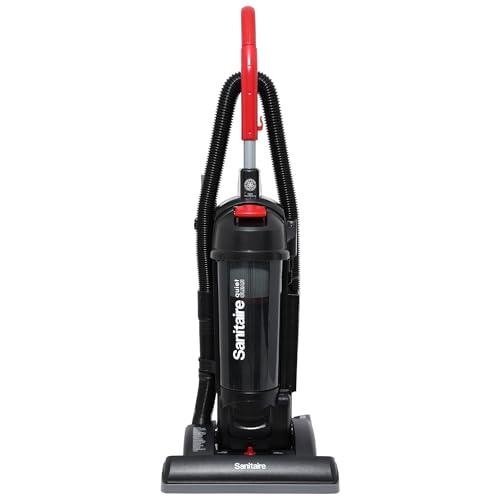
A 14-inch cleaning path is the right width for most commercial routes. It balances coverage per pass with maneuverability through doors, aisles, and furniture, which is why the leading commercial uprights, including the Hoover CH54113, Sanitaire SC5845, and Bissell BG1000, all run 14-inch paths. Twelve inches suits hotel rooms and tight spaces. Wider suits open floors.
Path width matters because it compounds. A 14-inch machine covers about 17 percent more floor per pass than a 12-inch machine at the same walking speed, and on nightly routes that percentage is paid labor. Width is not a comfort feature. It is the coverage spec.
Path Width Sets Your Coverage Rate
The 12-inch path is the specialist width for hotel rooms, offices with dense furniture, and anything with constant turning. The Oreck XL2100RHS runs this width because its job, room turnover, rewards maneuverability over raw coverage. A narrow machine in tight spaces finishes faster than a wide one that keeps bumping the doorframe.
The 14-inch path is the commercial default for a reason: it widens the pass by about 17 percent over 12 inches while staying narrow enough for doors, aisles, and van storage. Offices, schools, and retail carpet all reward this width, and the upright class built its best machines around it. Fourteen inches is the width that made everyone else compromise.
16-inch and wider paths belong on open floors where the machine runs straight for long stretches: lobbies, halls, warehouses, and convention space. When the floor stops forcing turns, width becomes pure productivity, and wider still, in the 28-inch wide area class, becomes a labor decision of its own.
The Hourly Rate Math of Path Width
If two operators walk the same speed, the wider path finishes first. A 14-inch machine covers about 17 percent more floor per pass than a 12-inch machine, and on a route with thousands of passes a night, that 17 percent is the difference between finishing the floor and buying an extra hour of labor. The path width number is an hourly rate wearing a spec sheet.
The caveat is that width only pays when each pass is finished. Agitation depth and filtration have to keep up, or the wide pass becomes a wide disappointment that gets redone. The 14-inch dual-motor machines in this class pair width with depth, which is why they dominate the coverage conversation.
- 12-inch: hotel rooms, tight offices, constant turns, the Oreck XL2100RHS class
- 14-inch: the commercial default for offices, schools, and retail carpet
- 16-inch and wider: open floors where straight passes dominate
- 28-inch wide area: lobbies and large venues, a labor decision of its own
What This Means for Your Operation
Match the width to the floor geometry before you match it to the brand. Hotel and tight-space routes run the 12-inch Oreck class. Standard commercial carpet runs the 14-inch default. Open floors graduate to wider machines. The right width is the cheapest productivity you will ever buy.
Frequently Asked Questions
Is a wider vacuum path always better?
What path width do commercial upright vacuums use?
How much faster is a 14-inch path than a 12-inch path?
Reference Standards for This Category
Published standards and programs that buyers in this category are typically accountable to. Listed for context, not as an endorsement of any product on this page.
Related
 Review
 Review
 Review